
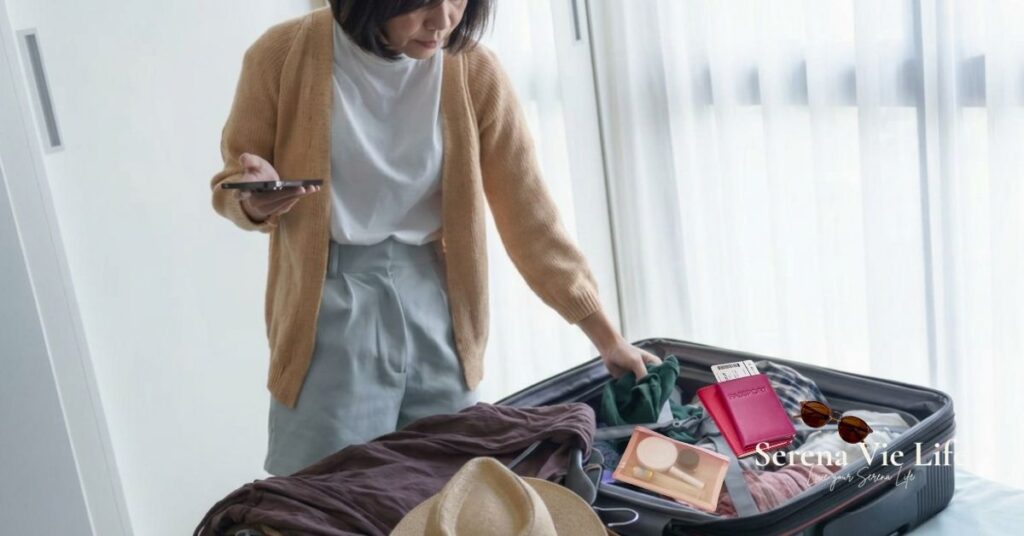
Travel after 50 is different. Not worse — often better, because you finally have the time and the perspective to do it right. But your body responds differently to long flights, disrupted sleep, and unfamiliar beds than it did at 35. The jet lag hits harder. The joints complain more. The sleep in a hotel room that’s too warm or too loud is more fragile.
A good wellness travel packing list for women over 50 isn’t about bringing your entire medicine cabinet. It’s about identifying the handful of things that genuinely make a difference to how you feel during and after travel — and not bothering with the rest. Here’s what actually earns its place in your bag.
This post contains affiliate links. If you purchase through them, I may earn a small commission at no extra cost to you.
The Foundations: Sleep and Circulation
Two things most reliably determine how you feel when you arrive somewhere: how well you slept on the way there, and how your circulation handled the journey. These are worth addressing specifically and practically.Sleep quality in transit and in unfamiliar beds
The sleep disruption of travel has two distinct phases. First, the transit itself — airplane cabins are pressurized, dry, noisy, and lit in ways that suppress melatonin and prevent the deeper sleep stages. Second, the first night or two in an unfamiliar environment — the “first night effect” is well-documented in sleep research, with the brain maintaining heightened vigilance in a new place and producing lighter, more disrupted sleep. Practical mitigation: a travel pillow that actually supports your neck (not the horseshoe shape that leaves your head falling forward), an eye mask that blocks light completely, and if needed, a low dose of melatonin timed to your destination’s sleep schedule. For more on evidence-backed sleep support, see our guide to natural sleep aids for women over 50.Circulation on long flights
After 50, circulation is less efficient at returning blood from the lower extremities, and prolonged sitting in cramped conditions makes this worse. The result is swollen feet and ankles, which is uncomfortable — and deep vein thrombosis (DVT) risk, which is more serious and increases with age. Compression socks are the single most effective non-pharmaceutical intervention for both, and they work best when put on before boarding rather than after swelling has begun.This post contains affiliate links. If you purchase through them, I may earn a small commission at no extra cost to you.
The Wellness Travel Packing List for Women Over 50
1. Compression Socks — for flights over 4 hours
Graduated compression socks apply more pressure at the ankle and less at the calf, which actively helps blood move upward against gravity. For women over 50 taking flights of four hours or more, they’re not optional wellness equipment — they’re basic travel health management. They also significantly reduce the swollen, sluggish feeling that makes the first day of a trip feel wasted. Rymora Compression Socks for Women and Men — medical-grade graduated compression (15-20 mmHg), moisture-wicking fabric, available in multiple sizes and colors. Slim enough to wear with shoes, comfortable enough for a 12-hour flight. One of the top-rated compression sock brands on Amazon with thousands of consistently positive reviews.2. Travel Pillow with Eye Mask
A neck pillow that keeps your head from falling sideways while upright sleeping is one of those products that looks trivial until you have one and then can’t travel without it. The eye mask that blocks light completely is equally non-negotiable — airplane cabin lighting, hotel room curtains that don’t close fully, and early morning light in summer destinations all disrupt sleep without it. Travel Pillow with Eye Mask Set — memory foam neck support with ergonomic 360° design, includes contoured eye mask. Machine washable cover, compact enough to clip to a carry-on. Designed to keep the head supported from multiple angles, not just from falling sideways.3. Gua Sha or Facial Roller — compact self-care
Airplane cabin air is extremely dry (typical humidity 10–20%, well below the 40–60% where skin functions optimally), and hotel environments vary. A rose quartz gua sha or facial roller takes up no space and serves two purposes on the road: reducing the puffiness that accumulates from disrupted sleep and salt-heavy travel food, and providing a familiar, calming ritual in an unfamiliar environment. The ritual aspect shouldn’t be underestimated — consistency in personal care practices is one of the more effective tools for managing the disorientation of travel. BAIMEI Rose Quartz Roller & Gua Sha Set — compact enough to fit in any makeup bag, includes both roller and gua sha stone. The cooling stone is particularly useful for morning depuffing after a poor night’s sleep. A dual-use tool that earns its weight every time.4. CoQ10 — for energy during jet lag recovery
Jet lag depletes cellular energy more than most people realize — the circadian disruption affects mitochondrial function directly. CoQ10 supports the cellular energy production that jet lag undermines, which is why many frequent travelers and flight crews report it as part of their recovery protocol. Take it with breakfast in the destination time zone for the first 3–4 days of travel. Qunol Ultra CoQ10 100mg — water and fat soluble with 3x better absorption than standard CoQ10. Compact softgels that travel easily. Take one daily with a fat-containing meal.5. B12 (Sublingual) — brain and energy support in transit
Travel disrupts the routine dietary patterns that provide B12 — particularly for women who rely on specific breakfast foods, yogurt brands, or prepared foods that aren’t available abroad. B12 supports neurological function, mood, and energy — all of which travel puts under stress. Sublingual (dissolves under the tongue) tablets bypass the stomach acid absorption issue that makes oral B12 less reliable after 50. For a complete look at supplements worth packing for midlife travel, see our guide to the best menopause supplements for women over 50. Solgar Vitamin B12 1000mcg Methylcobalamin Sublingual — dissolves under the tongue, no water needed. Small nuggets that slip into a supplement case or even a wallet. Methylcobalamin form, the bioactive version that doesn’t require hepatic conversion.What to Leave Behind
When building a wellness travel packing list for women over 50, the temptation is to overpack supplements and tools “just in case.” Here’s what rarely earns its weight:- Full skincare routines — decant the essentials (cleanser, moisturizer, SPF) into 50ml bottles. Everything else can wait two weeks.
- Multiple supplement formats — consolidate to what you’ll actually take consistently. Travel fatigue means fewer supplements, not more.
- Heavy magnesium formulations — fine at home, but the laxative risk increases when travel already disrupts your digestive routine. If you take magnesium regularly, stick to your exact usual dose and form.
- Elaborate sleep protocols — the basics (eye mask, neck pillow, sleep time aligned to destination) work better than complex sleep systems that require a perfect setup.