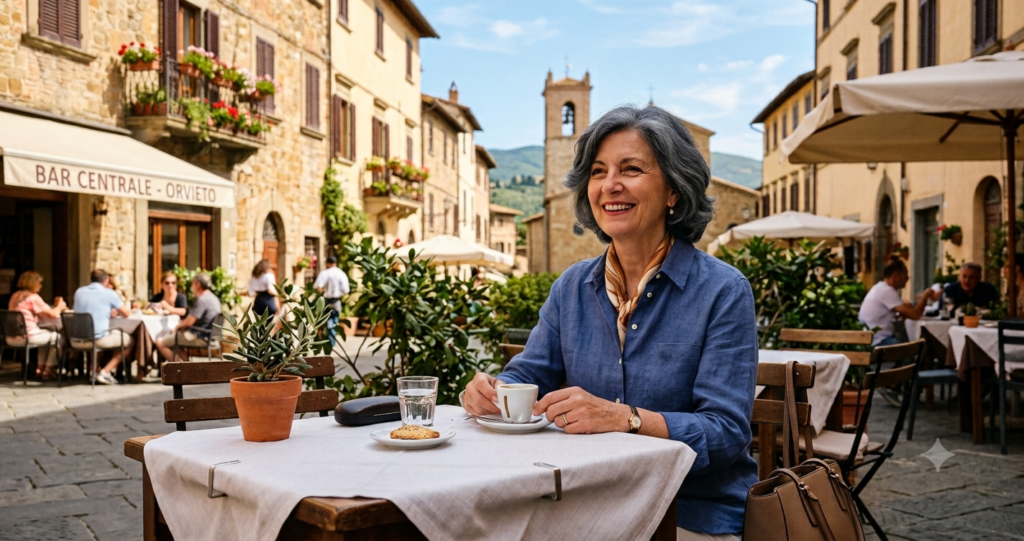
Spend any time in Italy and you notice something. Women in their 60s and 70s move through the world with an ease that has nothing to do with wrinkle creams or extreme diets. They look good, yes — but more than that, they seem settled in themselves. Content. Present. Not battling their age, but living it.
The secrets of Italian women who age gracefully aren’t secrets at all, once you look closely. They’re a collection of daily choices, cultural values, and lifestyle habits that most of us have heard of in pieces but rarely see assembled into a whole. Here’s the complete picture — and what you can realistically borrow from it.
Food as Pleasure, Not Medicine
Italian women don’t eat well because they’re disciplined. They eat well because their food culture makes good food the natural, enjoyable choice. Meals are made from whole ingredients, cooked simply, and eaten slowly with people they love. The Mediterranean way of eating isn’t a protocol — it’s just Tuesday.
The specific elements that make this anti-aging: extra virgin olive oil as the primary fat (oleocanthal, its active compound, rivals ibuprofen for anti-inflammatory effect), abundant vegetables and legumes, modest portions of quality protein, and wine — a little, with food, as part of a meal rather than as a stress-relief tool.
Equally important is what Italian women don’t eat: ultra-processed foods have far lower penetration in the Italian diet than in the American one. When convenience food is culturally unappealing, you simply don’t eat it very often. The result is a baseline anti-inflammatory diet maintained effortlessly, without willpower or tracking.
The Art of Walking Everywhere
Italian cities and towns are built for pedestrians. The result is that Italian women accumulate 8,000–12,000 steps a day without thinking about it — no gym membership required. Walking to the market, to a friend’s house, around the piazza after dinner is simply how life works.
This low-intensity, consistent daily movement is arguably more beneficial for long-term health than concentrated exercise sessions done a few times a week. It keeps joints mobile, maintains cardiovascular health, regulates blood sugar, and provides the social connection that comes naturally when you’re moving through your neighborhood on foot.
The practical adaptation: build walking into your day structurally. Park farther away. Walk to errands you’d normally drive. An after-dinner walk — even 15 minutes — mimics one of the most consistent habits of long-lived Italian women.
Investing in Skin, Not Fixing It
Italian women generally have a consistent skincare ritual that prioritizes maintenance over intervention. Cleansing, moisturizing, and sun protection — done reliably, from a relatively young age. They tend to go heavy on hydration (olive oil, both eaten and occasionally applied) and light on procedures.
There’s also a collagen awareness that’s embedded in the Italian approach to food: bone broths, gelatin-rich slow-cooked meats, and abundant vitamin C from tomatoes and citrus all support the body’s own collagen production. After 50, when collagen production drops by roughly 30%, topping up through both food and targeted supplements — see our guide to the best collagen for women over 50 — makes a visible difference in skin elasticity and joint comfort.
The approach isn’t about looking younger. It’s about looking like yourself — well cared for, rested, at home in your face.
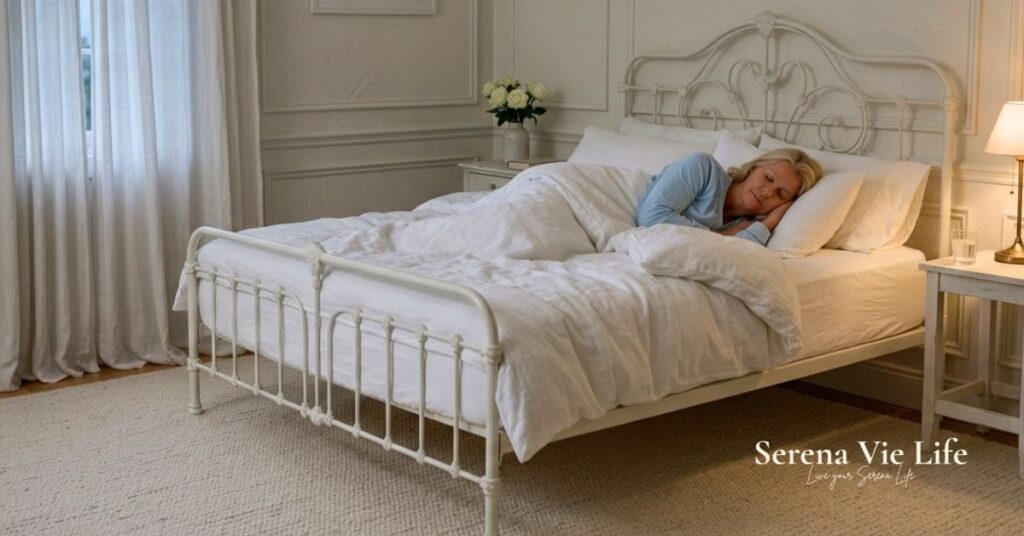
Rest Without Guilt
The Italian concept of riposo — the afternoon rest — isn’t laziness. It’s a biological recognition that the post-lunch energy dip is real, and that 20–30 minutes of horizontal time in the early afternoon improves afternoon cognitive performance and mood. Research has consistently supported what Italians have known by cultural practice for centuries.
More broadly, Italian women tend to have a different relationship with rest than American women do. Busyness is not a status symbol in Italian culture. Taking time to sit, to talk slowly, to do nothing in particular — dolce far niente, the sweetness of doing nothing — is valued rather than seen as wasted time. This relationship with rest has measurable effects on stress hormones and cardiovascular health over decades. If this idea of doing less, but better, resonates, our guide to slow living after 50 goes deeper into building it into daily life.
Connection as Daily Practice
Loneliness is one of the most significant risk factors for accelerated aging, cognitive decline, and early mortality — more so than obesity or sedentary behavior, according to research from Brigham Young University. Italian culture provides a natural antidote: la passeggiata (the evening stroll with neighbors), multi-generational family meals, strong friendships maintained across decades.
This isn’t something you can simply import. But you can intentionally rebuild connection structures in your own life — regular dinners with friends, maintained relationships with people from different life stages, physical presence in a community. These aren’t luxuries after 50. They’re health interventions.
Style as Self-Respect
Italian women of all ages tend to dress intentionally. Not expensively — but thoughtfully. The concept of bella figura — making a good impression, presenting yourself with care — means that how you appear to the world reflects how you regard yourself. This isn’t vanity. It’s a form of self-respect that has been shown to affect self-esteem, mood, and how others respond to you.
After 50, when many women feel invisible or disconnected from their sense of style, the Italian approach offers a useful reframe: dressing well isn’t for other people. It’s for you. It’s a daily act of honoring the person you are now — not the person you used to be.
This post contains affiliate links. If you purchase through them, I may earn a small commission at no extra cost to you.
How the Secrets of Italian Women Who Age Gracefully Apply to Your Life
1. A Mediterranean Diet Cookbook — Designed for Women Over 40
The most direct entry point into Italian-inspired eating is having practical recipes you’ll actually use. This cookbook translates the Mediterranean approach into quick, accessible meals for a modern schedule.
Super Simple Mediterranean Diet Cookbook for Women Over 40 — 150 recipes, all under 30 minutes. Focused on women’s health in midlife. Real food, practical approach, no obscure ingredients.
2. Collagen Peptides — Supporting What Your Body Makes Less Of
After 50, dietary collagen — whether from traditional bone broth or a quality supplement — fills the gap left by declining production. Vital Proteins is one of the most researched and widely trusted collagen brands available.
Vital Proteins Collagen Peptides — grass-fed, pasture-raised, unflavored. Dissolves completely in coffee, tea, or water. Supports skin elasticity, joint comfort, and hair and nail strength. 20g protein per serving.
The Italian Approach to Skincare After 50
Italian women don’t fight their skin — they work with it. After 50, the approach shifts from prevention to nourishment, and the results speak for themselves. Walk through any Italian farmacia and you’ll notice that the products favored by older women are remarkably simple: rich creams with few ingredients, facial oils, and a near-religious commitment to sun protection year-round.
The foundation of Italian skincare after 50 is hydration from within. Olive oil — consumed daily, not just applied — provides the essential fatty acids that keep skin supple from the inside out. A diet rich in tomatoes, peppers, and leafy greens supplies the antioxidants that protect against environmental aging. Italian women have been eating a skin-supporting diet for generations without ever calling it that.
Topically, the approach is just as disciplined. A quality facial oil applied at night (rosehip and argan are favorites), a simple SPF during the day, and — crucially — facial massage. Italian women massage their faces while applying products, using upward strokes that support circulation and lymphatic drainage. It takes three minutes. They’ve been doing it since their mothers showed them how.
The other piece is what Italian women don’t do. They don’t pick at their skin. They don’t sleep in makeup. They don’t follow every trend. There’s a confidence in their approach — a trust in a few good things done consistently — that is itself one of the secrets of Italian women who age gracefully. Skincare, like everything else in their lives, is a ritual rather than a task.
If you want to bring this approach into your own routine, start with one quality facial oil used consistently for 30 days. Add a daily SPF if you don’t already use one. Practice gentle upward massage every time you apply moisturizer. The investment is small. The compound effect over months and years is not.
Frequently Asked Questions
Do Italian women really age better than American women?
Population data consistently shows that Mediterranean countries have among the world’s longest life expectancies and healthiest aging curves. The dietary and lifestyle factors discussed here are well-documented contributors — though genetics, healthcare access, and economic factors also play roles.
Do I need to go to Italy to adopt these habits?
No. The habits themselves are fully portable: walking daily, eating whole foods slowly, maintaining close relationships, resting without guilt, dressing intentionally. Geography is irrelevant to any of them.
What’s the single most impactful thing to start with?
Walking more. It’s free, immediately accessible, and produces broad health benefits — metabolic, cardiovascular, cognitive, and social — that parallel many of the outcomes associated with long-lived Italian women.
Is the Mediterranean diet the same as eating Italian food?
Not exactly. Italian cuisine is one expression of the Mediterranean diet — but it varies enormously by region. Southern Italian cooking (closer to the classic Mediterranean pattern) is very different from northern Italian cooking. Focus on the principles: olive oil, vegetables, legumes, quality protein, whole grains, minimal processing.
Start Where You Are
You don’t need to move to Tuscany. You need to eat a little better, move a little more, rest without apologizing for it, and invest in the relationships that sustain you. These are the actual secrets of Italian women who age gracefully — not serums, not surgery, not a 30-day challenge. Just a different set of daily values, expressed in small, consistent choices over a lifetime.
Sources:
Willett WC et al. — “Mediterranean diet pyramid: a cultural model for healthy eating” — American Journal of Clinical Nutrition, 1995 — pubmed.ncbi.nlm.nih.gov
Holt-Lunstad J et al. — “Loneliness and Social Isolation as Risk Factors for Mortality” — Perspectives on Psychological Science, 2015 — pubmed.ncbi.nlm.nih.gov
Harvard Health Publishing — “The sweet science of the siesta” — health.harvard.edu